
Surround · Compact LCR
Matterhorn 8
An eight-inch loudspeaker with two jobs: surround and surround back alongside the 12 in a large room, or front LCR in its own right in a smaller one.
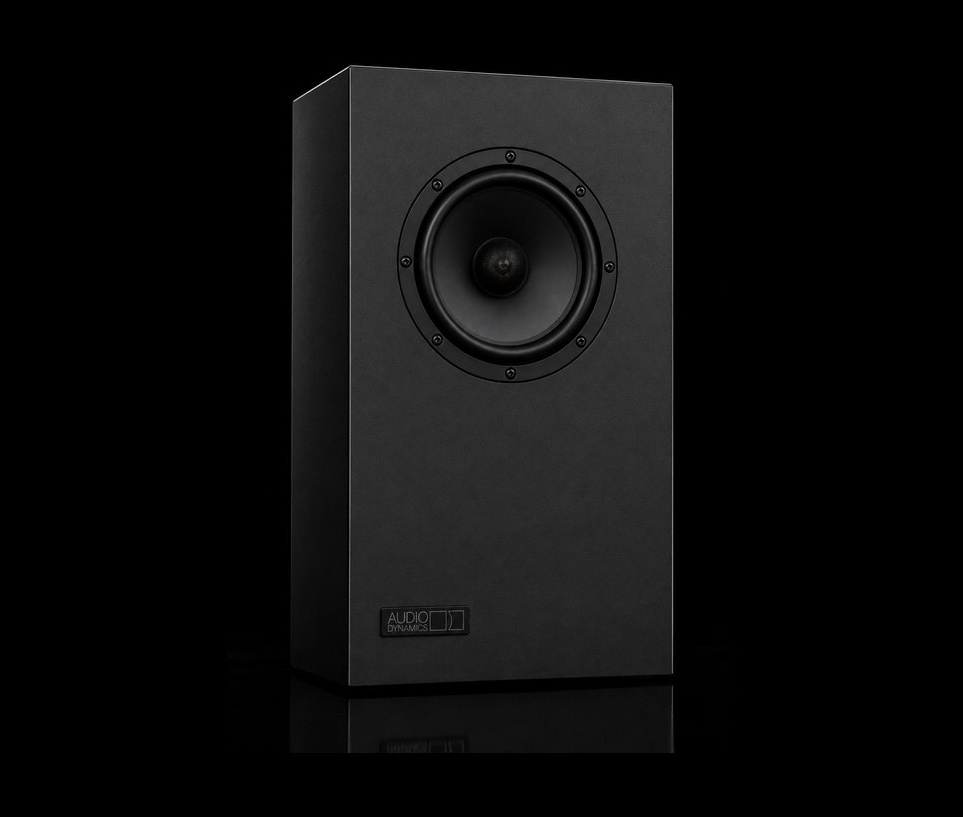
As a surround, the Matterhorn 8 is placed to the RP‑22 guidelines — side surrounds at ±90° to ±110°, rears at ±135° to ±150° relative to the primary seat — and is built to hold the 82 dB surround average with 102 dB peaks intact. Controlled directivity is what produces envelopment rather than a set of audible point sources behind you.
As a front LCR in a smaller dedicated room, it carries the same voicing and tonal balance as the Matterhorn 12. That matters more than it sounds: a system where the fronts and surrounds share a character produces a seamless soundstage, and one where they do not never quite settles no matter how carefully it is calibrated.
It is a sealed cabinet, like the rest of the range. Surrounds are usually the closest loudspeakers to the seats, which is where a port would be least forgiving: audible as noise on transients and as overhang on effects steered through the surround field. There is no port here to do either.
In both roles it crosses over at the RP‑22 recommended 80 Hz bass management point to the Matterhorn 18S.
Matterhorn 8
Full measured data — frequency response, sensitivity, dispersion and cabinet dimensions — is issued with the system proposal for a specific room.
Matterhorn 8 — common questions
In a smaller dedicated room, yes — it carries the same voicing as the 12 at a scale that suits the space. Where the seats sit further back, or the room volume is larger, the 12 is the right front channel.
It depends on the seating rows and the immersive format being targeted, not on a fixed number. Channel counts and angles are worked out as part of the room design.
RP-22 holds surrounds to their own target, and a system is only as good as the group that falls short. Surrounds that run out of headroom on a peak collapse the effect the front array is working to create.