
Subwoofer
Matterhorn 18S
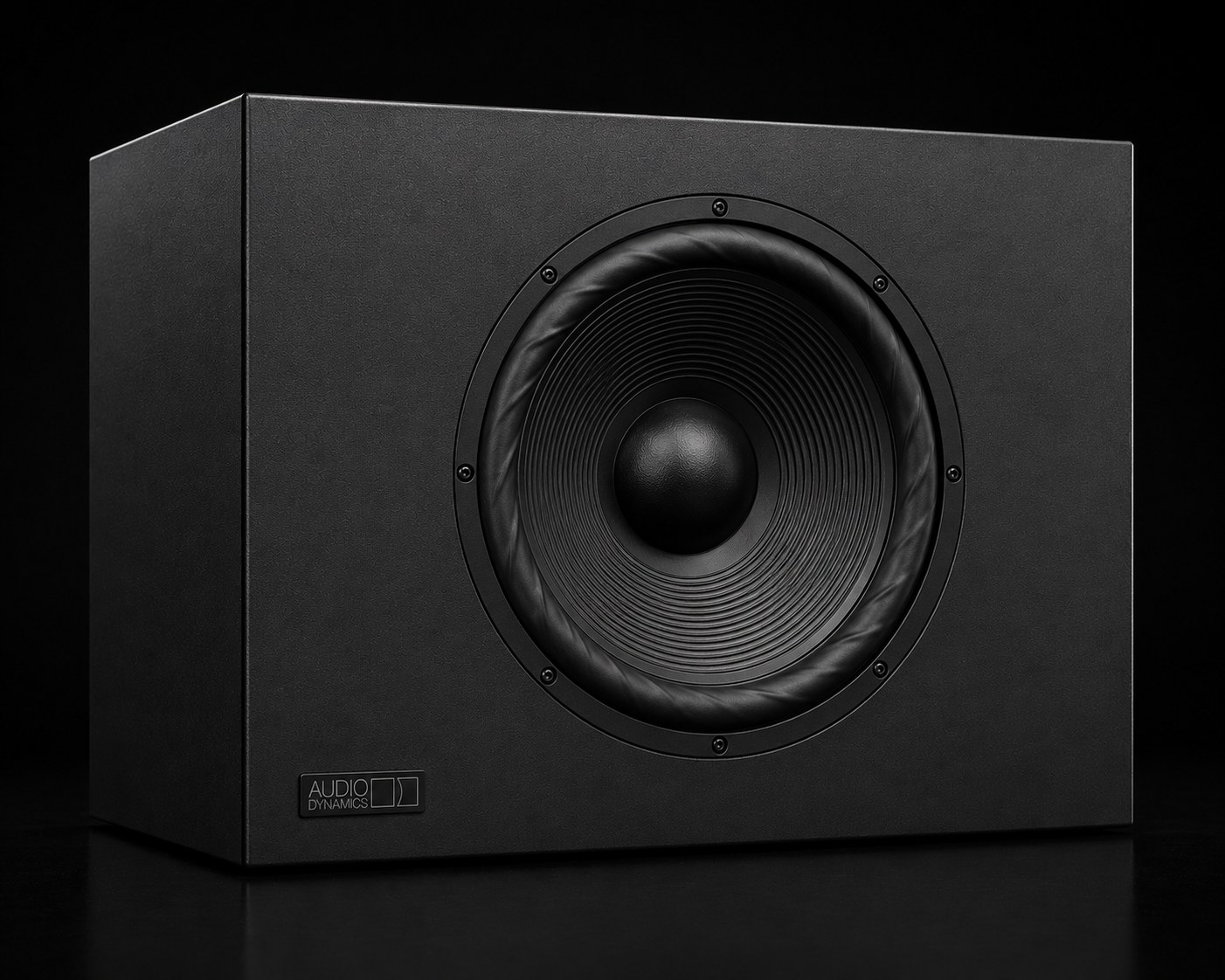
An eighteen-inch drive unit in a sealed enclosure, carrying the LFE channel and the bass-managed content from every other channel in the system.
RP‑22 asks the subwoofer system for 95 dB reference at the primary listening position with headroom for 115 dB peaks at 20 Hz. It is among the most demanding targets in residential audio, and it is where systems most often quietly fall short — not by failing to make bass, but by making it with overhang and compression once they are working hard.
The 18S is a sealed design, and that choice is aimed squarely at the 20 Hz peak. A ported box unloads below its tuning frequency: cone excursion runs away exactly where the standard asks for its hardest work, and the port itself compresses and resonates at the levels that matter. Sealed keeps the driver loaded all the way down, rolls off gently enough for room gain to rise to meet it, and has nothing in it to make a noise of its own.
What sealed costs is efficiency in the bottom octave, and that is what the eighteen-inch driver buys back. The size is not there for loudness. It is there so the subwoofer is still operating comfortably at the level the standard asks for.
Specify at least two. A pair averages out room modes, so bass is even across every seat rather than correct at one and wrong three feet away. It also raises headroom and lowers distortion at any given level, down into the bottom octave that gives modern soundtracks their physical weight.
Matterhorn 18S
Anechoic figures describe the subwoofer on its own. In-room extension is an estimate: it depends on the room, its construction and where the units stand, and is confirmed by measurement at commissioning.
Matterhorn 18S — common questions
Two or more average out room modes, so bass is even across every seat rather than only at one. They also raise headroom and lower distortion at any given level. For reference performance we recommend a minimum of two per room.
Position depends on the room's dimensions and modal behaviour, and is determined during the room design rather than by a rule of thumb. Symmetry is a starting point, not an answer.
The target is measured at the seat, and a larger room demands more output to reach it. The scale exists so the subwoofer is working within itself at reference — which is what separates bass you feel from bass that is merely loud.